
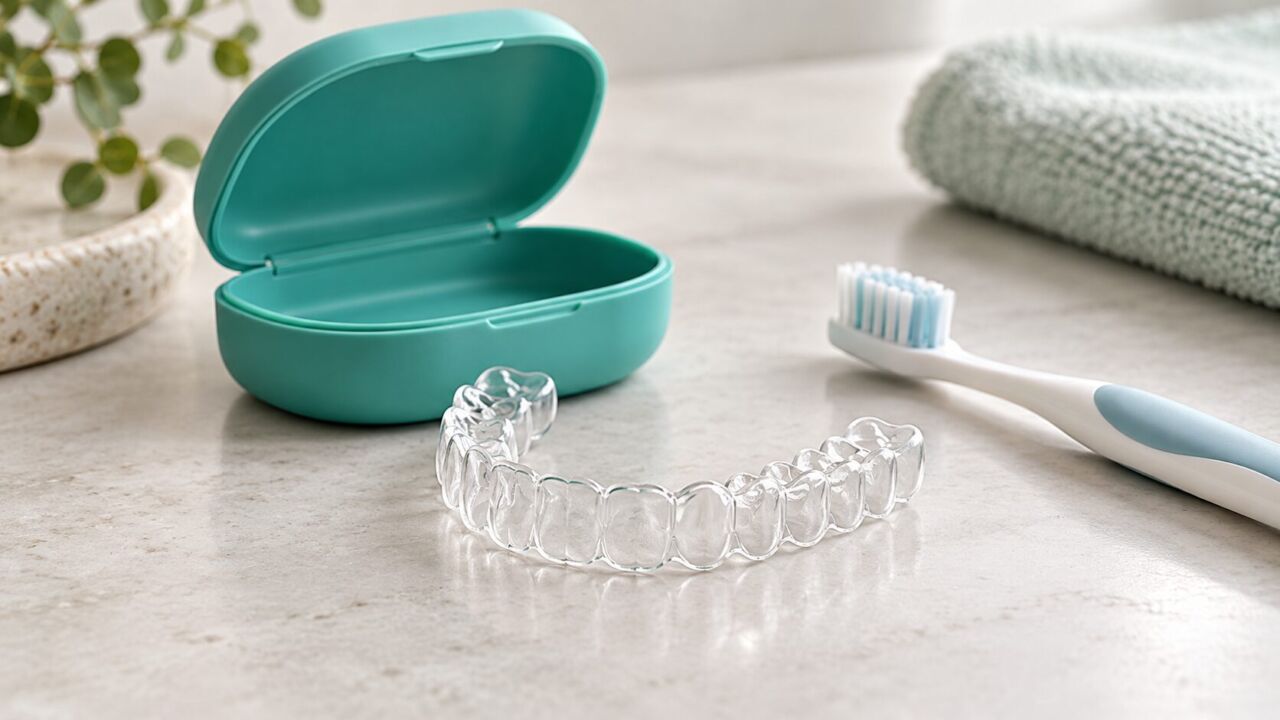
Living with clear aligners involves more than how the trays look. Before starting, ask about daily wear, cleaning, meals, progress reviews and retainers. This guide helps adults and teens prepare those questions; instructions for your own appliance come from your treating dentist.
For suitability and appointment information at Vita Dentistry, see our clear aligners service page. Compare fixed braces and read our orthodontics assessment overview. Your bite, oral health and ability to follow the plan affect the recommendation.
In this article
What clear aligners actually are (and aren’t)
Clear aligners are removable trays planned to move teeth in stages. Living with clear aligners means following an individual wear schedule and attending progress reviews. The number of trays, change intervals and total duration vary with the case.
They are not suitable for everyone. An examination considers the teeth, gums and bite before a treatment plan is recommended. Ask which movements are planned, what limitations apply and what alternatives are reasonable.
Clear Aligners North York: The 22-Hour Rule, Explained
Living with clear aligners requires a daily routine. Many systems require most of the day and night in the mouth, but the exact hours and change schedule must come from your treating clinician. A general “22-hour rule” is not a substitute for those instructions.
Before treatment, discuss how meals, school, work and cleaning fit into the plan. If you cannot meet the prescribed schedule, tell the clinic rather than changing trays early or extending treatment yourself. Ask what to do after missed wear and how fit will be reviewed.
Compare the practical responsibilities of removable appliances with fixed braces. Both options require care and follow-up; suitability depends on more than appearance.
Who’s a good candidate – teens and adults
Age alone does not decide whether aligners are appropriate. Tooth development, gum health, existing restorations and the bite all matter. Adults and teenagers should discuss their own findings and whether other dental care is needed before starting.
Ask whether the planned movements can be managed with aligners, whether attachments or other steps may be required and whether specialist assessment is appropriate. Living with clear aligners also requires the patient to follow the agreed routine. This article cannot determine candidacy from symptoms or photographs.
Your treatment timeline, honestly
Ask for a case-specific sequence rather than relying on a fixed number of months online. Planned movement, oral health, appliance fit, attendance and response to treatment can affect the schedule. A proposed completion date is an estimate, not a guaranteed result.
- Clarify which examination and records are needed before a plan is made.
- Ask how tray fit and progress will be assessed and when reviews are expected.
- Discuss how changes to the original plan would be explained.
- Ask about retention after active treatment and its ongoing reviews.
Living with clear aligners includes these follow-up responsibilities. If travel or work will affect appointments, discuss that before agreeing to a plan.
What your consultation answers (and why photos aren’t enough)
A consultation should address the teeth, gums and bite, the records needed and the limitations of the proposed treatment. Ask what the examination shows, which alternatives were considered and how follow-up will work. Do not assume that a particular scanner, simulation or appliance brand is provided without confirmation from the clinic.
Bring a medication list, relevant records and questions about daily wear. Tell the dentist about grinding, previous orthodontic treatment or problems with an existing appliance.
Orthodontic services are currently unavailable under the CDCP. See the official Dental Benefits Guide, section 6.8. This status was checked on October 18, 2026. Living with clear aligners and arranging treatment should be planned using current information, not assumed coverage.
Living with aligners: the practical stuff nobody mentions
Before starting, ask for written instructions for your appliance. Keep them available for meals, cleaning and travel. Living with clear aligners is easier to plan when you know whom to contact if something changes.
- Confirm when to remove the trays and how to store them safely.
- Ask how to clean the teeth and trays and which cleaning products are suitable.
- Discuss sports, musical instruments and any mouthguard requirements with the treating clinician.
- Ask what to do if a tray cracks, is lost or no longer fits.
- Report persistent discomfort or an unexpected change rather than forcing an appliance into place.
Do not reuse an earlier tray, skip ahead or modify the appliance without instructions for your case.
Frequently Asked Questions
Do clear aligners hurt?
Some pressure or discomfort can occur, especially when starting a tray. Ask your treating dentist what to expect and contact the clinic if pain is severe, persistent or accompanied by another concern.
Can teenagers use removable aligners?
Suitability depends on oral health, tooth development, the planned movements and the ability to follow instructions. Discuss school, meals, activities and support with the treating dentist before deciding.
Why does professional assessment matter?
A dental examination assesses the teeth, gums and bite and identifies whether records or imaging are needed. Progress reviews help the clinician assess fit and planned movement; photographs alone cannot establish a diagnosis.
Will I need retainers after treatment?
Retention is part of orthodontic planning. Ask which retainer is recommended, how to wear and clean it and when it should be reviewed. Follow your individual schedule rather than a general online routine.
Can only the top teeth be treated?
An assessment must consider how the upper and lower teeth meet. Ask whether a limited plan is appropriate and what its limitations and effects on the bite would be.
What if I lose an aligner?
Contact your treating clinic for instructions. Do not decide on your own to skip ahead or return to an earlier tray; the advice depends on your treatment stage and appliance fit.
Can clear aligners treat every bite problem?
No. The appropriate appliance depends on the specific tooth movements and bite problem. Your dentist may discuss fixed braces, combined approaches or specialist referral.
Does CDCP cover clear aligners?
Orthodontic services are currently unavailable under the CDCP, according to the Dental Benefits Guide checked on October 18, 2026. Confirm the current official rules before planning treatment.
References & Trusted Resources
- Canadian Dental Association: orthodontics — patient information about assessment and treatment options.
- American Association of Orthodontists: clear aligners — general information about appliances, wear and professional monitoring.
- Canada.ca: CDCP Dental Benefits Guide — section 6.8 states that orthodontic services are currently unavailable; checked October 18, 2026.
These independent resources do not imply endorsement of Vita Dentistry or clinical review of this article. This guide provides general patient information; diagnosis and appliance instructions require an individual assessment.
Book your visit
Have questions about living with clear aligners? Request an appointment at Vita Dentistry or call 647-276-0076. Describe your concern and confirm appointment availability. For treatment suitability, read the clear aligners service page; for the wider assessment pathway, see our orthodontics overview.

