
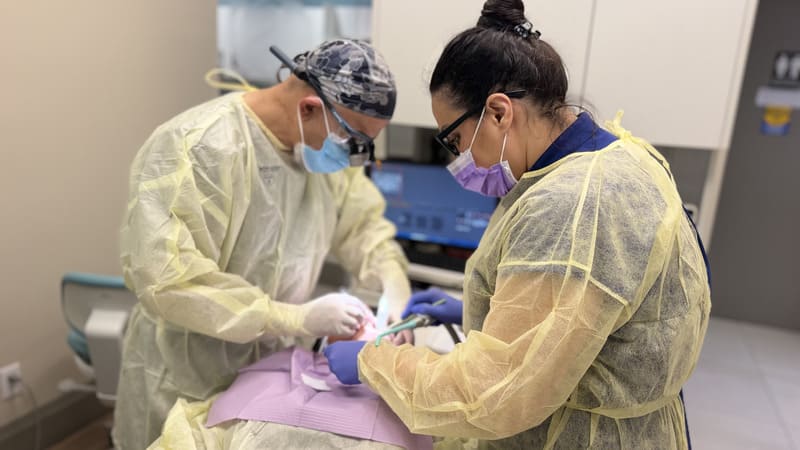
A loose filling, a crown that moves, or a tooth that suddenly feels different deserves a dental assessment. For patients in North York, the useful first step is to explain what changed and ask how soon the tooth should be examined. The repair depends on the tooth’s condition, so an online description cannot determine whether you need another filling or a crown.
In this article
What should you tell the dental office?
When contacting the office about a loose filling or crown, describe whether a restoration has come out, whether part of the tooth has broken, and whether you have pain or bleeding. Mention when the change happened and whether the tooth has had a crown or root canal treatment. These details help the team understand your concern and arrange the next step; they do not replace an examination.
The Ontario Dental Association advises seeing a dentist as soon as possible for a lost filling. It also recommends contacting a dentist immediately for constant or severe mouth pain, or a chipped tooth with pain or bleeding.
When might a loose filling need replacement?
A dentist examines a loose filling and checks the other existing restorations. Based on the findings, they may recommend replacing a loose or broken restoration. The Canadian Dental Association explains that cavities may need monitoring or a filling, depending on the clinical findings. Filling materials differ, and the options should be discussed with your dentist.
To learn about this treatment at Vita Dentistry, visit our dental fillings service page.
When might a crown be discussed?
A crown covers a natural tooth. According to the Canadian Dental Association, crowns may be used for a damaged tooth, to support a large filling, or after root canal treatment. A crown is not automatically needed every time a filling fails; an examination is necessary to discuss the appropriate restoration.
Crown treatment commonly involves preparing the tooth, taking an impression, using a temporary crown, and checking the final crown before it is secured. Some cases require additional steps. Read more on Vita Dentistry’s dental crowns and bridges page.
5 essential questions about a loose filling or crown
- What did the examination show?
- Which repair options are appropriate for this tooth, and why?
- Will treatment involve more than one visit?
- What steps does the proposed treatment involve?
- How should I care for the tooth while waiting for treatment?
Arrange an assessment in North York
If you have a loose filling or crown, contact Vita Dentistry to describe your concern and ask about an assessment. For urgent symptoms, review our emergency dental care information and contact the office promptly. Appointment availability must be confirmed with the clinic.
Frequently asked questions
Should I call about a loose filling if there is no pain?
Yes, contact the office to describe the concern and ask how soon it should be assessed. A lost filling should be reviewed promptly according to ODA advice.
How are dental fillings and crowns compared at a North York assessment?
Ask the dentist to explain what the examination shows, how much tooth structure remains and why a filling, crown or another repair is proposed. A loose restoration does not automatically establish which treatment is appropriate.
What should I tell the dental team?
Describe what moved or came out, when it happened and whether you have pain, swelling or bleeding. Mention previous treatment on the tooth if known.
What should the treatment plan include?
Ask about the assessment, proposed restoration, expected visits and follow-up. Clarify which clinical findings might change the plan and how those changes would be discussed.
Are all filling and crown repairs covered by CDCP?
Not necessarily. Coverage depends on the proposed repair and service rules. Ask the clinic to distinguish filling or crown repair from a new crown, which requires preauthorization.
CDCP coverage for this treatment
Eligible fillings and some crown repairs are included under CDCP. New crowns require preauthorization. The proposed repair must meet the applicable service rules.
Check the official CDCP coverage information and Dental Benefits Guide. Coverage must be confirmed for your proposed treatment; this article does not establish individual eligibility. Reviewed October 5, 2026.
Official patient information and professional guidance
For background, see CDA: Crowns, ODA: Dental Emergencies and Canada.ca: CDCP service coverage. Ontario professional advertising guidance is available from RCDSO. These organisations are independent resources; citing them does not imply endorsement of this clinic or approval of this article.
This article provides general patient information. Diagnosis, treatment choices and care instructions require an individual dental assessment.

