
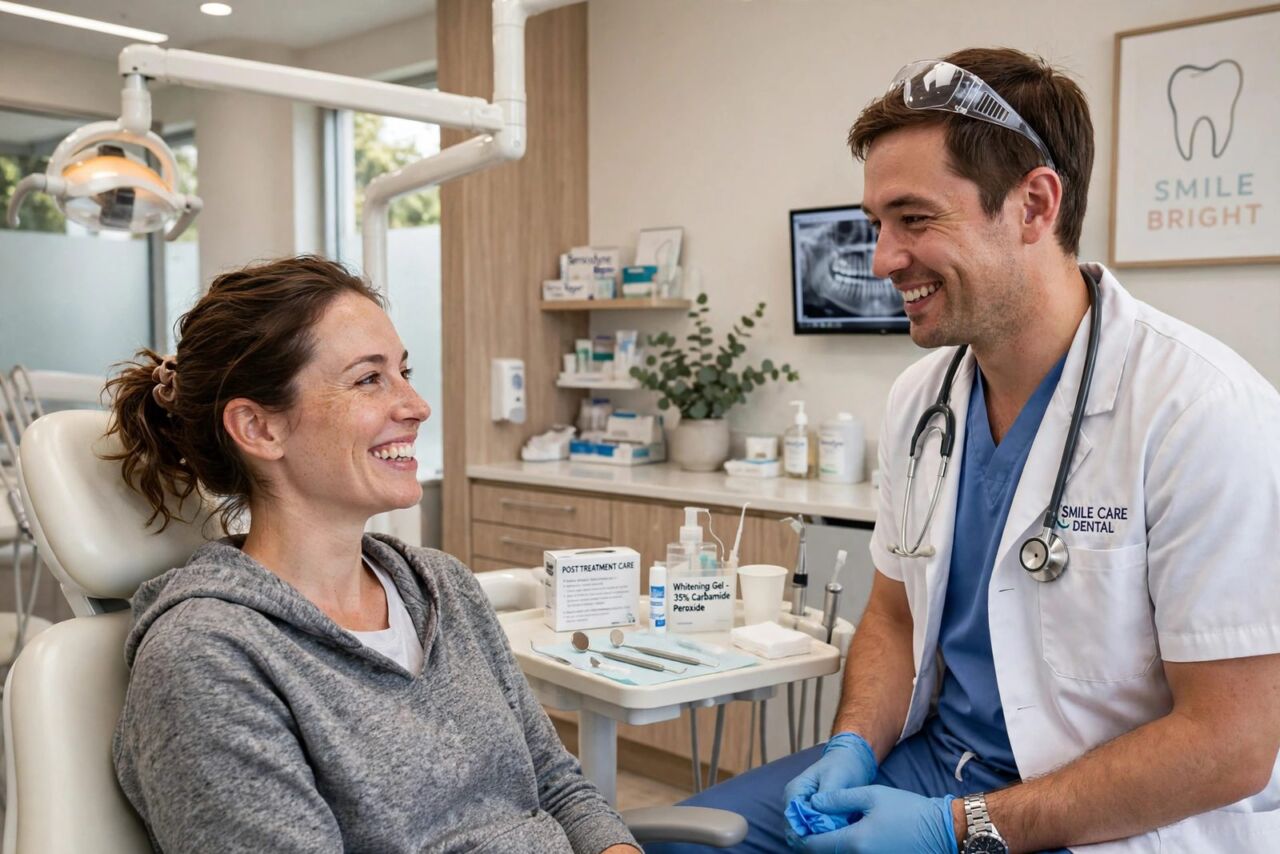
Teeth whitening is probably the most advertised treatment in dentistry — and the one surrounded by the most inflated promises. Strips, gels, toothpastes, “instant” kits: almost all of them show you the brightest possible smile and say very little about which stains actually respond, what happens to sensitive teeth, or why a crown in the front of your mouth will not change colour no matter what you put on it.
This guide is the honest version. It explains why teeth darken in the first place, how professional teeth whitening in North York actually works, where it genuinely beats the drugstore shelf and where it doesn’t, and — just as important — what it cannot change. If you finish it knowing whether whitening is even the right treatment for your teeth, it has done its job.
Table of Contents
In this article
Why Teeth Darken — Surface Stain vs Deeper Discolouration
Almost every case of “my teeth look yellow” is one of two different problems, and they respond very differently to whitening:
- Surface (extrinsic) stain sits on the outside of the enamel. It builds up from coffee, tea, red wine, cola, tobacco, and strongly coloured foods, and from plaque and tartar that hold those pigments against the tooth. This is the discolouration whitening — and, before it, a professional cleaning — is best at lifting.
- Deeper (intrinsic) discolouration lives inside the tooth itself. Enamel thins with age, letting the naturally darker dentin underneath show through. A tooth that has died after an injury can darken from within. Certain medications taken while teeth were developing, and conditions like fluorosis, can also change a tooth’s internal colour. Whitening can improve some of this, slowly and partially — but it cannot rewrite a tooth’s underlying colour, and some intrinsic stains barely respond at all.
This is why an honest whitening conversation starts with a question, not a product: what is causing the colour? A stain that sits on the surface, a stain that lives in the dentin, and a filling that has aged to a darker shade are three different problems with three different answers — and only an examination can tell them apart.
How Professional Whitening Works
All effective whitening — professional or over-the-counter — works on the same chemistry. The active ingredient is a peroxide-based gel (hydrogen peroxide, or carbamide peroxide, which breaks down into hydrogen peroxide). The peroxide penetrates the enamel and reacts with the coloured compounds trapped in the tooth, breaking them into smaller, less coloured molecules. The tooth itself isn’t stripped or bleached white like cloth; its stain load is reduced, so it reflects more light and looks lighter.
What makes whitening professional is everything around the gel:
- An examination first. The dentist checks for cavities, cracked teeth, leaking fillings and gum disease — problems that should be treated before any whitening gel goes near them — and identifies what kind of discolouration you actually have.
- A cleaning, if one is due. Whitening gel works on the tooth surface, not through a layer of tartar; surface deposits are removed first so the result is even.
- Protection and supervision. In in-office treatment, the gums and soft tissues are shielded before the gel is applied, the application is timed and monitored, and the starting shade is recorded so the change can be judged honestly.
- The right format for the person. Depending on the assessment, the dentist may recommend in-office whitening or dentist-supervised take-home trays made to fit your teeth — our page on professional whitening treatment describes how that choice is made at Vita Dentistry. Take-home trays spread the same chemistry over more days at a gentler pace, which some patients — especially those prone to sensitivity — tolerate better.
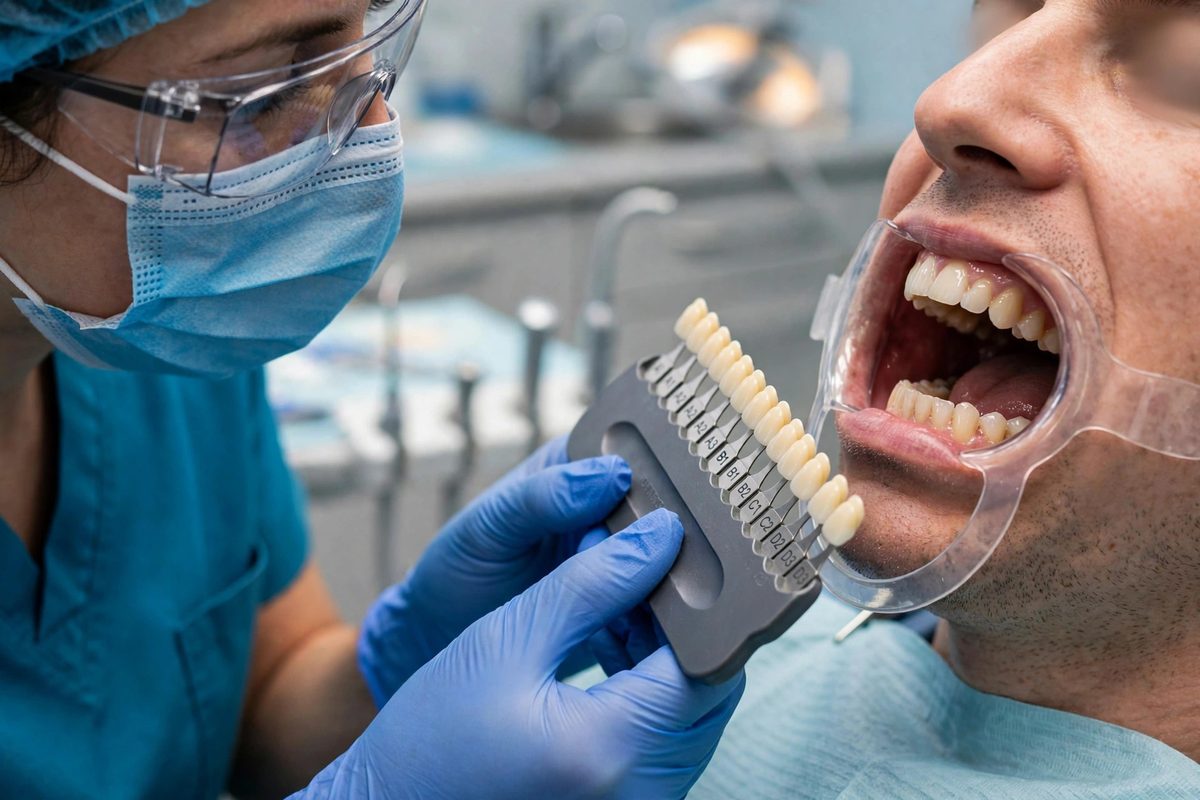
What professional whitening does not involve is a stronger promise. A supervised treatment gives a more controlled, more even result than an unsupervised one; it does not give anyone a specific shade, and any clinic that names one in advance is guessing at your expense.
Professional vs Over-the-Counter: An Honest Comparison
Over-the-counter products are not useless — they use the same peroxide chemistry. The differences are concentration, fit, and supervision:
- Strength. Drugstore strips and gels use lower peroxide concentrations than professional products, so change is slower and often more modest. Whitening toothpastes mostly work by abrasion — they scrub surface stain off and can help maintain a result, but they do not meaningfully change a tooth’s underlying shade, and overuse can wear enamel and increase sensitivity.
- Fit. A one-size strip touches teeth unevenly — more gel in some spots, none in others, and gel leaking onto gums. Custom trays and in-office application put the gel where it belongs and keep it off the tissues it irritates.
- Supervision. A kit cannot tell you that the dark tooth you’re trying to whiten is dark because its nerve has died, or that the patchiness you’re seeing is early decay. An examination can — and that diagnosis matters more than the shade does.
- The trade-off that favours kits: they cost less up front and are convenient for mild surface stain and for maintenance between professional treatments. Many patients reasonably use them that way, ideally after a dentist has confirmed whitening is suitable for their teeth.
If your real question isn’t “how do I whiten?” but “which cosmetic treatment fits my teeth at all?”, that comparison — comparing veneers, whitening and bonding — is covered in its own guide, because the answer depends on the tooth, not the advertisement.
What Whitening Cannot Change (Fillings, Crowns, Veneers, Dead Teeth)
This is the section the advertisements skip. Whitening gel acts on natural tooth structure only:
- Fillings, crowns and veneers do not whiten. Porcelain and tooth-coloured filling materials keep the shade they were made at. If you whiten the natural teeth around an old front crown, the teeth get lighter and the crown doesn’t — leaving a mismatch that usually means replacing the restoration to match the new shade. This must be planned before whitening, not discovered after.
- A single dark tooth is a warning sign, not a whitening case. A tooth that darkens on its own has often had its nerve die after a knock or deep decay. Whitening its surface does nothing for the problem inside it; it needs an examination and, often, root canal treatment first.
- Deep internal stains respond poorly. Tetracycline staining, significant fluorosis and some developmental discolouration may improve only slightly even with extended treatment. For these, veneers for deeper discolouration — which cover the tooth with a new surface — are frequently the more honest recommendation.
- Whitening doesn’t fix shape, alignment or damage. Chips, gaps, worn edges and crooked teeth are different problems with different treatments. Whitening changes colour only.
None of this makes whitening a lesser treatment — for the common case of surface stain and age-related dulling on healthy teeth, it is the simplest, most conservative cosmetic option there is. It just has a defined job, and this is its boundary.
Sensitivity: What’s Normal and How It’s Managed
Some temporary sensitivity during or after whitening is common and expected — it is the most frequent side effect of the treatment. The mechanism is straightforward: peroxide can pass through the enamel and temporarily irritate the nerve inside the tooth, which responds with a zing to cold or a general tenderness. For most people this settles within a day or two of the last application; gum irritation from gel touching the soft tissues likewise fades quickly once the gel is removed.
How it is managed:
- Screening first. Existing sensitivity, exposed roots, untreated decay and cracked teeth all predict a rougher whitening experience — one more reason the examination comes before the gel.
- Pacing. Spacing applications out, shortening sessions, or choosing the gentler take-home pace lets treatment continue without grinding through discomfort.
- Desensitizing measures. Your dentist may recommend a desensitizing toothpaste or fluoride treatment around the whitening period, and simple pain relief if needed.
- Stopping rules. Sharp, lingering pain — pain that throbs, wakes you at night, or singles out one tooth — is not normal whitening sensitivity and should be reported; it can be the first sign of a problem that was already developing inside the tooth.
What no one should tell you is that whitening involves no sensitivity at all. A treatment plan that expects some, and manages it, serves you better than a promise that it can’t happen.
How Long Results Last — and What Shortens Them
There is no honest single number here, because the result is not a coating that wears off on a schedule — it is your teeth, gradually re-staining at the rate your habits dictate. For many people a professional result holds up well for a year or more before a touch-up is wanted; for a heavy coffee drinker who smokes, visible dulling can return much sooner. What shortens the result:
- Tobacco — the fastest re-stainer there is, and the hardest on everything else in the mouth too.
- Dark drinks and foods — coffee, tea, red wine, cola, curries and berries, especially in the first days after treatment while the enamel is most receptive to pigment.
- Skipped hygiene and skipped cleanings — surface stain rebuilds on plaque; the cleaning you postpone is the one that was keeping the result bright.
- Time itself — enamel continues to thin slowly with age, and the darker dentin shows through a little more each year regardless of whitening.
Maintenance is correspondingly simple: the habits in the closing section, regular check-ups and cleanings, and an occasional touch-up rather than a full restart — your dentist can advise when the shade has genuinely drifted rather than just picking up surface stain that a cleaning would remove.
Who Should Wait (Pregnancy, Untreated Decay, Gum Disease)
Whitening is elective — nothing about it is urgent — which means there is rarely a reason to push ahead when conditions aren’t right. You should generally wait, and treat first, if:
- You are pregnant or breastfeeding. Whitening in pregnancy has not been well studied, and the standard, cautious advice is to postpone elective cosmetic treatment until after. The wait costs nothing — the stains will still be there, and so will the whitening.
- You have untreated cavities, cracked teeth or leaking fillings. Gel reaching the inside of a compromised tooth can cause real pain and can worsen the problem. Decay is treated first; whitening after.
- Your gums are inflamed or you have active gum disease. Gel against sore, bleeding gums is miserable and the inflammation needs care in its own right.
- You are under 18 with still-developing teeth, or your dentist finds your enamel or roots are not suited to whitening — in either case the assessment, not the calendar, decides.
- Your expectations are set on a specific shade. If only one exact outcome would satisfy you, whitening is the wrong treatment to start, because no one can deliver a guaranteed shade. A conversation about alternatives serves you better.
“Wait” is not “never”. Most of these are sequencing decisions — treat the decay, settle the gums, finish the pregnancy — after which whitening is assessed again on a healthy mouth.
Keeping the Result: Habits That Protect It
The least glamorous section of this guide is the one that determines how long anyone’s whitening lasts:
- Be careful for the first 48 hours. Freshly whitened enamel takes up pigment most readily right after treatment. Favour lighter-coloured foods and drinks for a couple of days, and if you do have coffee or tea, a straw and a rinse of water afterwards genuinely help.
- Brush twice a day with fluoride toothpaste and clean between your teeth daily. Whitening removes stain; hygiene stops it rebuilding. A whitening toothpaste used a few times a week can help maintain the surface — used aggressively every day it can wear enamel and feed sensitivity instead.
- Keep your check-up and cleaning rhythm. Professional cleaning removes the new surface stain and tartar that dull the result, and the examination catches problems while they are still small.
- If you smoke, this is one more reason among many to stop — nothing undoes whitening, or harms the mouth generally, faster.
If you’re weighing professional teeth whitening in North York and want an answer based on your teeth rather than an advertisement, start with an assessment: call Vita Dentistry at (647) 276-0076. The dentist will identify what’s actually causing the colour, tell you plainly whether whitening can change it, and — if it can’t — what would work instead.
References
The guidance in this article reflects Canadian dental practice and patient-education resources from the Ontario Dental Association, the Canadian Dental Association and the Royal College of Dental Surgeons of Ontario (RCDSO). Dentists in Ontario are licensed by the RCDSO, and patients can verify a dentist’s registration on the RCDSO website.
Information about Canadian Dental Care Plan coverage is from the Government of Canada’s Canadian Dental Care Plan pages (Canada.ca), linked in the questions below. CDCP rules can change; if anything here differs from Canada.ca, Canada.ca is correct.
Frequently Asked Questions About Professional Teeth Whitening
Is professional whitening safe for enamel?
Used as directed under a dentist’s supervision, professional whitening is considered safe for enamel — the peroxide gel works on the stain compounds within the tooth rather than stripping the enamel away, and decades of clinical use and research support that when the screening step is done properly. The honest caveats are about misuse, not the treatment itself: whitening over untreated decay or cracked teeth can cause pain and harm, very frequent unsupervised whitening can increase sensitivity and wear, and abrasive “whitening” scrubs can damage enamel mechanically. This is why the professional version starts with an examination — the safety comes from the assessment and supervision, not just the gel.
Will whitening work on my crown or filling?
No — and this catches more people out than any other whitening fact. Whitening gel changes the colour of natural tooth structure only. Crowns, veneers and tooth-coloured fillings stay exactly the shade they were made. If the restoration is on a back tooth, it may not matter; if it’s a front tooth, whitening the surrounding natural teeth will leave the restoration visibly darker by comparison. The correct sequence is to whiten first, let the new shade settle, and then replace or adjust the restoration to match — which is a cost and planning conversation to have before whitening, not after. Your dentist will flag any restoration in the visible zone at the assessment.
How much whiter will my teeth get?
Nobody can honestly tell you a number in advance, and you should be wary of anyone who does. The change depends on your starting shade and, most of all, on what is causing the discolouration: surface stain from coffee, tea or tobacco usually lifts noticeably; age-related dulling improves moderately; deep internal stains — from a dead tooth, certain medications or fluorosis — may improve only slightly or not at all. What a professional assessment gives you is a realistic range for your teeth, a recorded starting shade so the change can be judged fairly, and a straightforward answer if whitening is unlikely to give you what you’re hoping for — in which case alternatives like veneers may be the better conversation.
Does whitening hurt?
Most people feel no pain during professional whitening itself. The common side effect is temporary sensitivity afterwards — a zing with cold drinks or a general tenderness — caused by the peroxide temporarily irritating the nerve inside the tooth. It typically settles within a day or two and can be reduced by pacing the treatment, using desensitizing toothpaste or fluoride as your dentist advises, and ordinary pain relief if needed. What whitening should never cause is sharp or lingering pain in one tooth; if that happens, report it, because it can point to a cavity, crack or dying nerve that needs treatment in its own right. Comfort in whitening is managed by screening and pacing — not promised away.
Does the CDCP cover teeth whitening?
No. Teeth whitening is a cosmetic treatment, and cosmetic services are not part of the Canadian Dental Care Plan’s standard coverage — the plan’s covered services, listed on the Canadian Dental Care Plan (Canada.ca) page, are the ones directed at oral health: examinations, X-rays, cleanings, fillings, root canal treatment, gum care, dentures and similar care for eligible members. If you are a CDCP member, your plan can still be helping with the health side of your care — including the examination and any treatment your teeth need before whitening would even be considered — but the whitening itself is a private expense, planned and priced separately from any covered care.
How long do the results last?
It depends mostly on you. Whitening doesn’t coat the teeth, so there is nothing to “wear off” — instead, new stain gradually accumulates at the speed your habits set. Many patients are happy with the result for a year or more before wanting a touch-up; smoking and frequent coffee, tea or red wine shorten that considerably, while good daily hygiene and regular professional cleanings extend it. When the shade does drift, a touch-up is usually simpler than the original treatment — and sometimes what looks like fading is just new surface stain that a cleaning removes. Your dentist can tell the difference at a check-up.
My teeth are already sensitive — can I still whiten?
Possibly, with a plan built around it — but the sensitivity needs understanding first, because it has causes whitening can aggravate. Sensitivity from receding gums and exposed roots, from worn enamel, or from an untreated cavity or crack each behaves differently under whitening gel. At the assessment the dentist identifies the likely cause, treats anything that needs treating, and may recommend the gentler route — dentist-supervised take-home trays at a slower pace, applications spaced further apart, desensitizing toothpaste or fluoride before and during — or may advise that whitening isn’t a good idea for your teeth right now. What you shouldn’t do is start an unsupervised kit on already-sensitive teeth and push through worsening pain.
Can I whiten my teeth while I’m pregnant or breastfeeding?
The standard advice is to wait. Whitening during pregnancy hasn’t been well studied, so dentists take the cautious route and postpone elective cosmetic treatment until after pregnancy — and usually until after breastfeeding as well. Nothing is lost by waiting: whitening is not health treatment, the discolouration will be unchanged, and your regular check-ups, cleanings and any necessary dental care continue as normal in the meantime (and should — gum health in particular deserves attention during pregnancy). If whitening matters to you, raise it at a check-up and it can be planned for the right time.

