
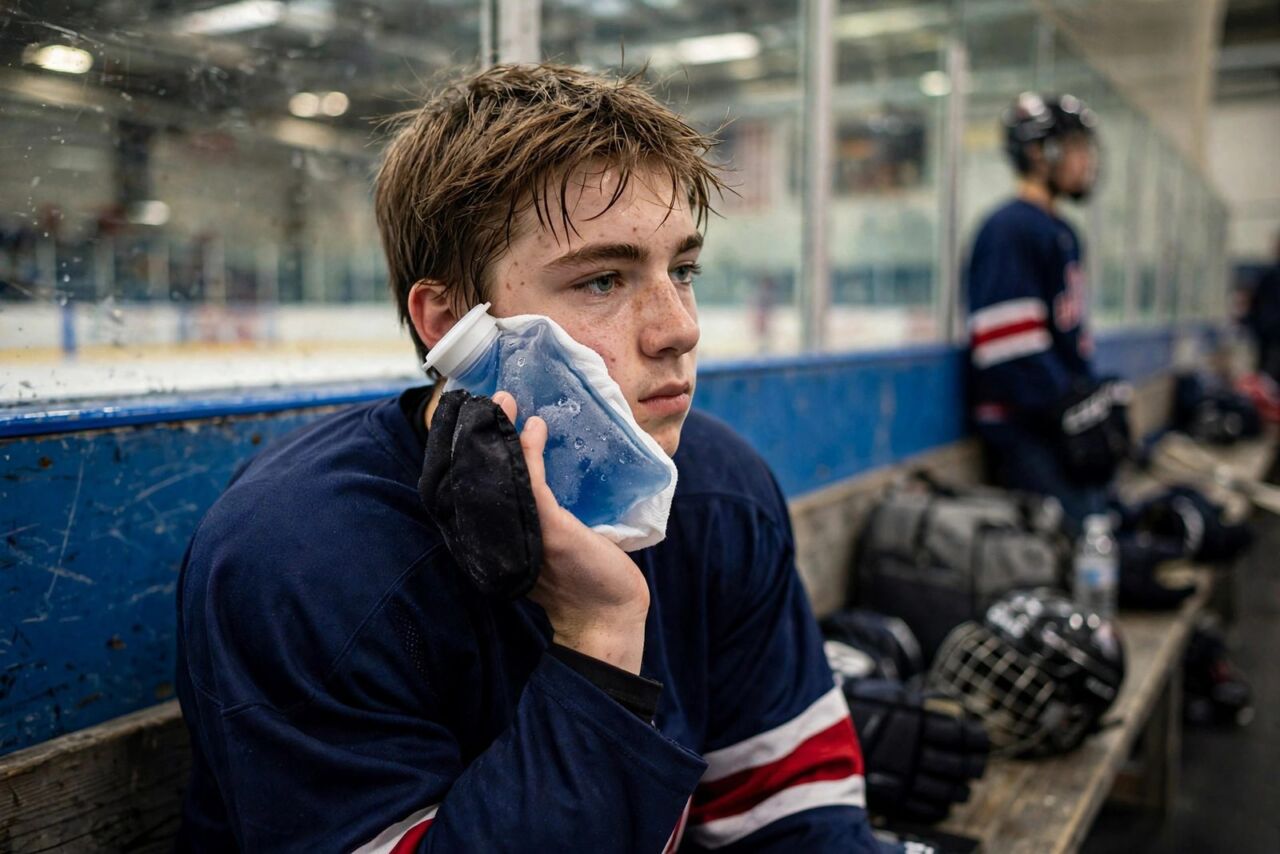
It happens in a second — a fall on the ice, an elbow in a hockey game, a tumble off a bike on a North York side street. The tooth is on the ground, or in your hand, and your heart is pounding. If you are reading this because of a knocked-out tooth in North York, stop scrolling and do the steps in the next section first, then call a dentist. A permanent tooth that is handled correctly and treated quickly can often be saved. A tooth handled the wrong way, or left dry on a counter, usually cannot.
This guide gives the step-by-step first aid, what to store the tooth in, how baby teeth are different, and what treatment at Vita Dentistry involves, so you know what happens after you arrive. For the full picture of urgent care, see emergency dental care in North York at Vita Dentistry.
On this page:
- The 30-Minute Window: Why Time Decides This Tooth’s Fate
- Step by Step: Pick It Up Right, Rinse, Replant or Store It
- What to Store It In (and What Not to Use)
- Baby Teeth Are Different: Never Replant
- When It Is a Chip or a Crack Instead
- What the Dentist Can Do: Splinting and Follow-Up
- What If Too Much Time Has Passed?
- Getting Help in North York: Hours and What to Do After Hours
- References
- Frequently Asked Questions About a Knocked-Out Tooth
The 30-Minute Window: Why Time Decides This Tooth’s Fate
A tooth stays alive in its socket because of a thin layer of living cells on its root, called the periodontal ligament. Those cells are what allow a knocked-out tooth to reattach. Once the tooth is out of the mouth, the cells on the root begin to die — fastest when the root dries out. Outcomes are most favourable when a permanent tooth is put back into its socket, or kept in a suitable liquid, and a dentist sees it within about 30 to 60 minutes. Teeth have still been saved after longer periods, especially when they were stored properly, so it is always worth trying — but every dry minute lowers the odds, which is why the steps below come before everything else in this guide.
Step by Step: Pick It Up Right, Rinse, Replant or Store It
- Find the tooth and pick it up by the crown only — the white part you normally see when you smile. Never touch the root, the pointed part. Handling the root crushes the living cells the tooth needs to survive.
- If it is dirty, rinse it briefly — a few seconds under gently running water or in milk. Do not scrub it, do not use soap, and do not dry it or wrap it in tissue.
- If you are an adult and feel able, put it back. Gently push the tooth into its socket, making sure it faces the same way as the teeth beside it, then bite down softly on a clean cloth or gauze to hold it in place. Its own socket is the ideal place for the tooth to travel in.
- If you cannot replant it — or it is a child’s tooth — store it in liquid instead (see the next section) and get to a dentist immediately.
- Call ahead while you travel. Tell the clinic a tooth has been knocked out, so the team is ready when you arrive. Call Vita Dentistry at (647) 276-0076 during opening hours.
Control any bleeding by biting gently on clean gauze. A cold compress on the cheek helps with swelling. If the injury involved a blow to the head, loss of consciousness, vomiting, or a possibly broken jaw, go to a hospital emergency department first — teeth come second to those injuries.
What to Store It In (and What Not to Use)
If the tooth cannot go straight back into its socket, keep its root cells alive in one of these, in order of preference:
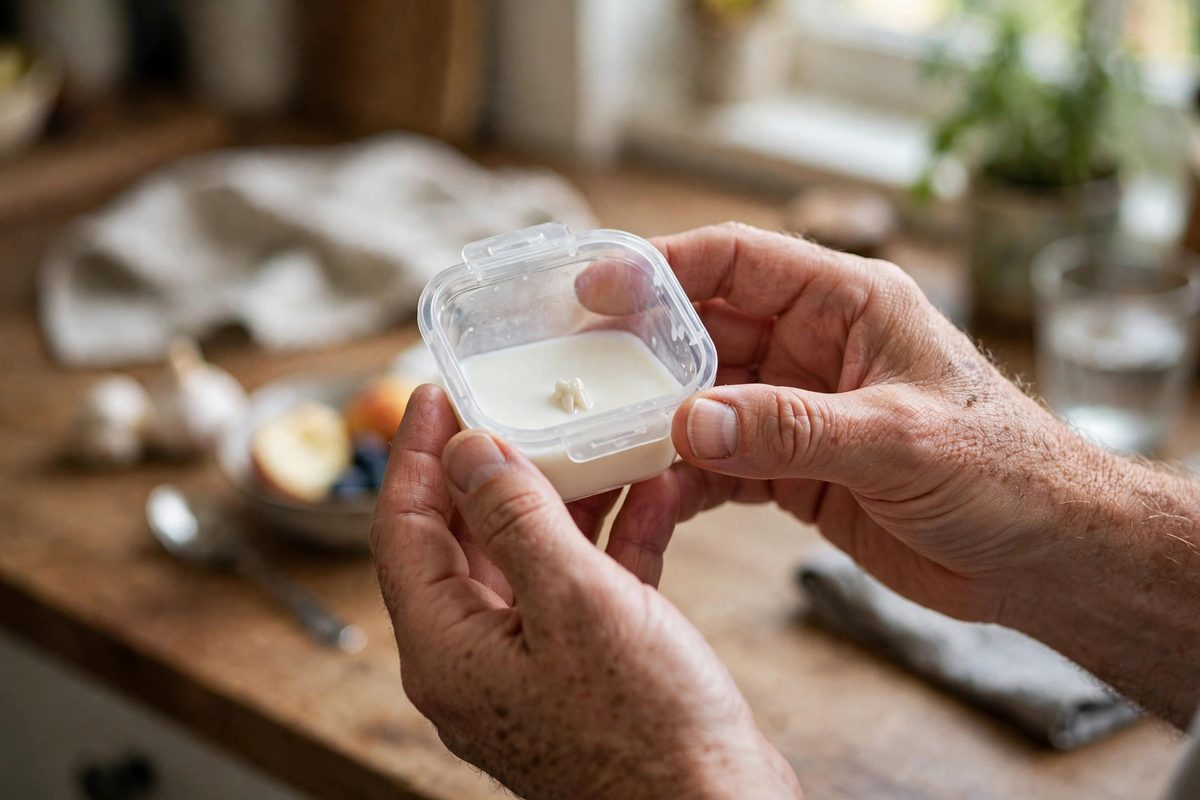
- Milk — the most practical good option in most homes. Put the tooth in a small container of milk and bring both with you.
- Inside the cheek — an older child or adult who will not swallow it can hold the tooth between the cheek and the gum. Never do this for a young child, because of the swallowing risk.
- Saline or a tooth-preservation kit, if one is at hand (sports facilities sometimes stock them).
- Plain water only as a last resort, and only briefly. Water is actually hard on root cells; it is better than letting the tooth dry out while you find milk, but switch liquids as soon as you can.
What not to do matters as much: never let the tooth dry out in a tissue or napkin, never carry it loose in a pocket, and never scrub the root clean — the “dirt” you are tempted to remove includes the cells that make saving the tooth possible.
Baby Teeth Are Different: Never Replant
Everything above applies to permanent (adult) teeth only. If a baby tooth is knocked out, do not try to put it back. Pushing a baby tooth back into the socket can damage the adult tooth developing underneath it. Instead: find the tooth so you know it came out whole rather than being pushed up into the gum, control bleeding with gentle pressure on gauze, comfort your child, and call the clinic for advice and an assessment. A dentist will check that no fragment remains and that the developing adult tooth looks unharmed, and will talk through what happens to the space until the adult tooth arrives. The same first-aid thinking applies when a filling or crown came out — keep the piece, do not try to glue anything yourself, and call.
When It Is a Chip or a Crack Instead
Not every knocked tooth comes out whole. If the tooth is chipped or broken but still in place, find and keep any fragments — in milk, the same way — because a fragment can sometimes be bonded back on. Rinse your mouth gently with warm water. A small chip that does not hurt is not usually a same-hour emergency, but it should still be assessed promptly: a crack can reach deeper than it looks, and an injury that loosens a tooth without displacing it (the tooth feels tender or slightly mobile) also needs an examination and follow-up, because damage to the nerve can show up weeks later. When in doubt, call and describe what happened; you will be told honestly how quickly you need to be seen.
What the Dentist Can Do: Splinting and Follow-Up
At the clinic, the socket and tooth are checked and X-rays are taken. If the tooth has not already been replanted, the dentist will usually replant it under local anaesthetic. The tooth is then held in place with a flexible splint attached to the neighbouring teeth — typically for about two weeks — so the ligament can reattach without the tooth being jostled. You will be given specific instructions on eating soft foods, keeping the area clean without disturbing it, and any medication. Follow-up visits are a real part of the treatment, not a formality: the nerve inside a replanted tooth can die later even when the tooth reattaches, so the tooth is monitored over the following months, and root canal treatment is sometimes needed afterwards to keep it. Vita Dentistry’s dentists are general dentists; injuries involving the jaw or complex fractures are referred to the appropriate specialist or hospital service, and you will be told that plainly at the visit. After the tooth is stable, a routine follow-up exam after an injury schedule is set so nothing is left to chance.
What If Too Much Time Has Passed?
Sometimes a tooth cannot be saved — it was found too late, it dried out, or the root is fractured. That is disappointing news, and it should be given honestly, along with what comes next. A missing tooth leaves a space that neighbouring teeth drift toward, which affects the bite over time, so replacement is a conversation worth having once the area has healed: options can include a bridge or a dental implant, each with its own suitability and limits, assessed case by case. Nothing about that decision needs to be made on the day of the injury. The first visit deals with the injury; the replacement planning happens at follow-up, with time to think.
Getting Help in North York: Hours and What to Do After Hours
Vita Dentistry is open Monday and Tuesday 9:30 a.m. to 5:00 p.m., Wednesday and Thursday 10:00 a.m. to 6:00 p.m., Friday 11:00 a.m. to 7:00 p.m., and Saturday 9:30 a.m. to 3:00 p.m.; the clinic is closed on Sundays. During those hours, call (647) 276-0076 as soon as a tooth is knocked out — tell the team what happened so they can prepare, and come in right away. You can also book an appointment online for follow-up care. If a serious dental injury happens when the clinic is closed, do not wait with a dry tooth: store it in milk as described above and seek emergency care — a hospital emergency department can assess facial injuries and advise on urgent dental options. For severe swelling, uncontrolled bleeding, or any head injury, call 911 or go to the nearest emergency department immediately.
References
- Canadian Dental Association — dental emergencies and knocked-out tooth guidance for patients: cda-adc.ca
- Ontario Dental Association — patient oral health resources: oda.ca
- Government of Canada — Canadian Dental Care Plan: canada.ca
- Royal College of Dental Surgeons of Ontario — public register and patient resources: rcdso.org
Frequently Asked Questions About a Knocked-Out Tooth
Can a knocked-out tooth really be saved?
Often, yes — for a permanent tooth, if the root cells survive. Results are strongest when the tooth is replanted or kept in milk (or in the cheek) and a dentist treats it within about 30 to 60 minutes. Teeth stored properly have been saved after longer periods too, so always try. What cannot be promised is the outcome in any individual case: the dentist will assess the tooth, the root and the socket and tell you honestly what the chances look like.
Should I put the tooth back in myself?
For an adult’s own permanent tooth, yes, if you feel able: pick it up by the crown, rinse it briefly without scrubbing, push it gently into the socket the right way round, and bite softly on a clean cloth to hold it. If it will not go in easily, do not force it — store it in milk and come in. For a child’s baby tooth, never put it back; replanting a baby tooth can damage the adult tooth developing underneath.
What if I can’t get to a dentist right away?
Keep the tooth working for you while you travel: replanted if possible, otherwise in a small container of milk, or inside an older child’s or adult’s cheek. Do not let it dry out, and do not store it in water for longer than it takes to find milk. Call the clinic on the way so the team is ready. If the clinic is closed and the injury is serious — uncontrolled bleeding, swelling, a possible jaw injury — go to a hospital emergency department rather than waiting.
Does the CDCP cover emergency visits?
For eligible patients, the Canadian Dental Care Plan covers emergency examinations and many of the treatments an injury like this involves, according to the CDCP fee guide. Eligibility comes first — the plan is for Canadian residents without access to dental insurance whose adjusted family net income is under $90,000 — and coverage is a percentage set by the plan, not automatically the full amount. Confirm your eligibility and what the plan pays; the team can explain how it applies to your visit.
My tooth was knocked loose but not out — is that still urgent?
Yes. A tooth that has been loosened, pushed sideways, or pushed up into the gum by an impact needs prompt assessment even if it looks almost normal. The ligament and nerve may be damaged in ways that only show on an X-ray or at follow-up, and a displaced tooth is easier to reposition early. Call the clinic the same day during opening hours and describe what happened.
What if the tooth broke into pieces, or I can’t find it?
Bring any fragments you can find, stored in milk — a fragment can sometimes be bonded back. If you cannot find the tooth at all, still come in: the dentist needs to check whether the whole tooth came out or whether part of the root remains in the socket, and to make sure a missing tooth has not been inhaled or swallowed, which occasionally needs a medical check. An X-ray settles most of these questions quickly.
Will my child need treatment if a baby tooth is knocked out?
Usually the visit is an assessment rather than treatment: checking that the whole tooth came out, that the gum and neighbouring teeth are unharmed, and that the developing adult tooth underneath looks unaffected on an X-ray. The dentist will also talk about the space the baby tooth was holding — in some cases a simple space maintainer is suggested so the adult tooth comes in where it should. Nothing is replanted, and most children need only monitoring afterwards.
How do I reach Vita Dentistry for a dental emergency?
Call (647) 276-0076 during opening hours — Monday and Tuesday 9:30 to 5:00, Wednesday and Thursday 10:00 to 6:00, Friday 11:00 to 7:00, Saturday 9:30 to 3:00; the clinic is closed Sundays. Say a tooth has been knocked out, and the team will tell you to come in right away and be ready for you. After hours, store the tooth in milk and seek emergency care; for severe injuries call 911 or go to the nearest emergency department.